SEM Software – Four Amazing Tools

Jul. 21

I’m a tremendous fan of pay per click automation. I just wrote a FREE 12 page whitepaper all about buying the right search marketing software platform. I highly recommend checking it out!

Last Friday, I also wrote all about portfolio theory versus margin maximization bidding models. Today, I’m super excited to continue the SEM automation trend and discuss four of the most popular SEM software tools. Specifically, I’m going to introduce Marin Software, Kenshoo, Efficient Frontier, and ClickEquations. While there are pros and cons with all tools, I’m really going to focus on some of the high level pros of each tool today. At the end of today’s post, I’m hoping you go away with four great tools that you can evaluate for your organization’s SEM program.

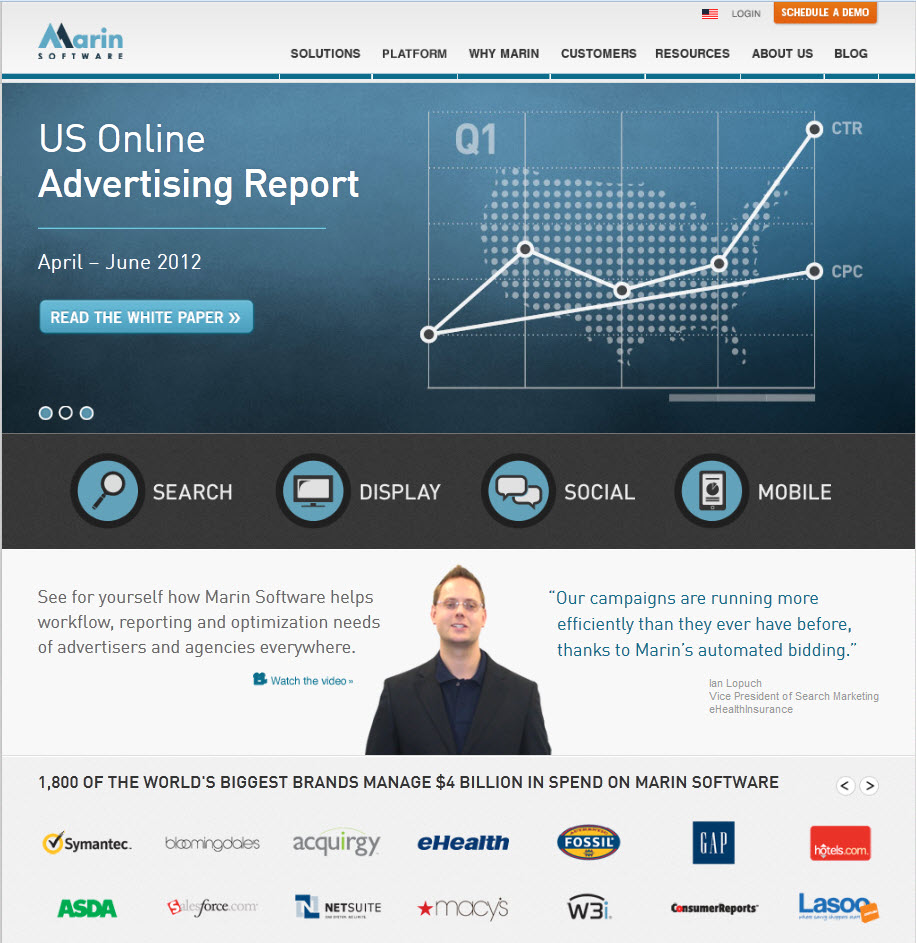
Marin Software – The Industry Leader

One Plus One

I’m starting with Marin Software because it’s one of my favorite SEM software tools of all time. In fact, I had the pleasure of recently interviewing Matt Lawson from Marin Software (one of my favorite posts on PPC Ian). Following are a few of my favorite things about Marin:

  • As the largest search marketing application, Marin has over 180 customers and $1 billion in annual paid search spend. This figure is absolutely amazing! More than anything, more spend equals more features (and better features). Marin clearly has the client base to support best of breed innovation.
    • Just one recent example: Marin now supports Facebook Ads. (I’m a big believer in the future of Facebook and also recommend checking out my review of Jonathan Volk’s Facebook Ads book.)
  • Marin Software has the best account management team, period. I personally know several of the account managers at Marin and give them my highest recommendation. Marin hires the top dogs of the corporate pay per click industry, account managers that can truly add value to your program. It’s actually quite funny: The best campaign managers I know all end up joining Marin!
  • As you know from my last post, I’m a huge fan of the margin maximization bidding model. Marin offers a no-nonsense (anti-black box) bidding model that absolutely delivers. In my opinion, it’s the best bidding engine out there.
  • Marin’s user interface is amazing and polished. If you’re going to be in one application all day, you want one that’s easy to use, visually appealing, and powerful, right? You get all of these benefits with Marin. They truly put the user first.
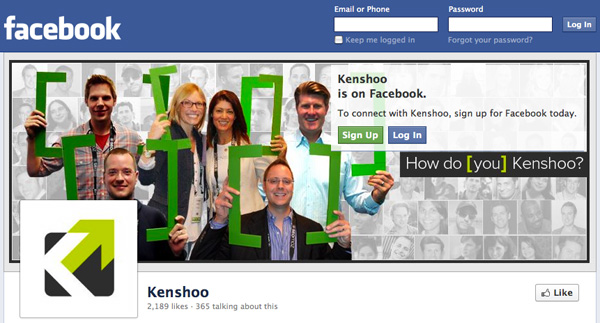
Kenshoo – Intelligent Campaign Automation

Kenshoo is another one of my favorite search marketing applications. It’s actually really crazy: About a year ago, I visited an office warming party at Kenshoo’s new San Francisco office and had the pleasure of meeting and chatting with Mike Moritz, one of the top venture capitalists in the world. Over the last year and a half, I’ve really gotten to know the Kenshoo team and give them my top recommendation. Following are just a of my favorite things about Kenshoo:

  • Kenshoo is new! Let’s face it: The search engine marketing industry has matured. I’ve been doing this stuff for over 6 years now and can hardly believe it. The beauty of Kenshoo is it’s a brand new application so its code base is fresh, innovative, and fast.
  • As you may know, I earned my BS in Computer Science from Stanford University back in 2004. Recently, I spoke all about online marketing at Stanford’s Graduate School of Business. I love technology and innovation. Kenshoo is all about innovation. Their roots are in technology and they think and build innovation like true engineers.
  • If you’re in product shopping, Kenshoo offers amazing crawling technology that will spider your site and link your SEM campaigns into the various nodes of your site. This technology can do some really great stuff such as keeping prices in your ad copy up to date with current prices on your site, and so much more.
Efficient Frontier – Optimized Performance Marketing

Next I’m looking forward to discussing some of my favorite aspects of Efficient Frontier. Efficient Frontier is a little different than Marin Software and Kenshoo in that it’s more of an agency package. Marin Software and Kenshoo enable internal SEM teams to better manage their campaigns. Efficient Frontier, however, not only offers an amazing software solution but also combines it with the leverage of agency resources. If you’re looking to leverage one of the most amazing bidding models out there while outsourcing your campaign management, Efficient Frontier is an excellent option. Following are a few highlights:

  • Efficient Frontier offers the premier portfolio theory based bidding model around. As I discussed in my last post, there are two really great bidding models for the corporate setting: portfolio theory and also margin maximization. If you’re under a budget (especially a strict one), I’d definitely encourage you to investigate portfolio theory.
  • How many people work on your team? Do you plan to hire more? Let’s face it: There are many situations where you simply don’t have the ability to hire more team members, but you need more scale. Now, it’s my firm belief that any of the tools in this post will help you in that situation, they all offer scale. However, there’s nothing like the power of outsourcing and agency assistance for maximum leverage.
  • Efficient Frontier is the leader in algorithmic bidding. They employ some of the most amazing PhDs in the industry and can truly take your bidding to the next level.
ClickEquations – The First Intelligent Paid Search Solution

I’m going to close out today with ClickEquations. ClickEquations is a newer paid search application that has taken the industry by storm. I’m going to write a bit less about ClickEquations simply because I don’t know as much about it. However, that definitely doesn’t mean there is anything less valuable with this tool. Following are some of my favorite things about ClickEquations:

  • The management team at ClickEquations truly gets it. At SMX Advanced Seattle, I had the pleasure of hearing Craig Danuloff, President and Founder of ClickEquations, talk about Quality score. He presented a quality score whitepaper that is truly the best I’ve seen on the topic. I highly recommend checking it out! After reading this whitepaper, I’m convinced you will be a fan of ClickEquations too!
  • ClickEquations has a superb team. At multiple conferences, I’ve heard Alex Cohen (Digital Alex) speak on behalf of his employer, ClickEquations. This guy always hits the ball out of the park and makes a great name for his company. It’s people like this that truly inspire confidence.
  • I’m a big fan of the ClickEquations Blog. The blog makes a great name for the company and I can’t wait to learn more about this great SEM tool.

Image of One Plus One © iStockPhoto – topshotUK

Posted in: Automation | Tags: , , | Comments: 4 comments so far, join the discussion!

Portfolio Theory Versus Margin Maximization

Jul. 16

Have you checked out my SEM Automation Buyer’s Guide yet? I highly recommend it! You’ll get 12 FREE pages of information about buying the perfect SEM software for your company. I’ve been at the forefront of SEM technology for the last six years and share my proprietary methodology for choosing the perfect platform.

Two Very Popular SEM Bidding Models

Math Formulas

Today, I’d like to stay on the topic of SEM automation and specifically discuss two very popular bidding strategies: portfolio theory and margin maximization. I’m a tremendous fan of bidding automation. It’s really the only way to go when you manage hundreds of thousands if not millions of keywords. Of course, you’ll always want to involve human judgment (and supervision), especially on high volume keywords, but a solid bidding model will become your organization’s SEM backbone. At the end of this post, you will walk away with two things:

  1. An understanding of the differences between portfolio theory and margin maximization.
  2. An understanding of which model makes the most sense for your particular business model.
What is Portfolio Theory?

Portfolio theory based bidding models involve a parameter (or parameters) you’re trying to maximize given certain constraints. Typically, you’ll find portfolio models set up to maximize volume of conversions within a budget constraint. You’ll often have a cost per acquisition constraint as well, whereby the algorithm stops short of the budget if your overall CPA is running too high.

Within your portfolio, different keywords will end up running at very different CPAs (cost per acquisition). You may have some running at extremely high margins with others even running at a negative margin. It’s all really a function of the CPA/volume tradeoff. In those cases where the algorithm can drive significantly more volume at slightly higher CPAs, it will go for it. In cases where higher CPAs drive relatively less incremental volume, the algorithm will decide to go for margin. At the end of the day, the algorithm does its best to make intelligent tradeoffs so the overall portfolio’s volume is maximized within the constraints.

In my opinion, portfolio based bidding models are absolutely awesome! They tend to break down a bit when you have an unlimited budget, although elements of the portfolio theory can still help you out in that scenario (more on this later). The most well known portfolio software out there: Efficient Frontier.

What is Margin Maximization?

So now we’ll move onto margin maximization. Over the course of my SEM career, I’ve worked mostly at companies that have had unlimited budgets. That’s right! As long as the CPA is at or below the target, I have been free to drive as many conversions as possible. It’s precisely in these types of situations that a margin maximization model thrives.

What is margin maximization? It’s simple: The model basically maximizes your margin (typically percentage margin) on a keyword level. If you have enough statistically significant data on a keyword level, it’s easy to just bid 1 – margin percentage target (while also adjusting upward to take into account slack, the delta between your bid and actual CPC). What if you don’t have enough statistically significant data on a keyword level? The best margin maximization models will forecast your keyword level revenue per visitor based on closely related keywords.

The primary benefit of margin maximization: You can rest at night knowing that you are never losing money on any keywords (as long as your forecasted keyword values are accurate). One of the downsides of margin maximization: You can sometimes leave volume on the table. If you simply take a lower percentage margin on certain keywords, you may be able to drive significantly more volume. There are a few tricks in getting around this downside, however. The first involves experimenting with different percentage margins in an effort to optimize your dollar margin. The second involves experimentation on a keyword level to allow a few loss leaders in your campaign. The margin maximization platform that I’m most familiar with (and highly recommend): Marin Software.

Which SEM Bidding Model Do I Prefer?

So what’s my preference: Portfolio theory or margin maximization? It’s really a function of my constraints. If I have a budget constraint, I’m a portfolio theory guy all the way. If I have unlimited budget, I’m all for margin maximization.

Let me tell you however, even in the second case (unlimited budget), I’m a fan of a hybrid approach. I’ll manage most keywords to a strict margin percentage. However, I will experiment placing my the best keywords (Google.com only, exact match only, category leaders) at higher bids. In cases where I can drive significantly more volume at a lower percentage margin, I’ll sometimes make the tradeoff, especially if my organization needs the volume. In terms of making up the percentage margin for the overall portfolio, I’ll often rely on my trademark terms because they run at such high margins.

So I’ve mentioned Efficient Frontier and Marin Software. What are some other great SEM applications? I recommend checking out Kenshoo and ClickEquations. In a future post, I’m looking forward to discussing some of these SEM applications and more!

Image of Math Equations © iStockPhoto – enot-poloskun

Posted in: Automation | Tags: , | Comments: 14 comments so far, join the discussion!

SEM Automation Buyer’s Guide Whitepaper

Jul. 12

Hey Everyone,
Today is an exciting day! I’m officially launching PPC Ian’s Whitepaper Series. Today, you’ll have the opportunity to download my FREE 12 page whitepaper all about buying SEM automation software. I’m launching my SEM Automation Buyer’s Guide, the culmination of years of very hard work in the SEM technology arena. Want to download my free whitepaper? Read on! Instructions follow at the end of this post, it’s easy…

SEM Automation Software

SEM Automation Buyer's Guide

There’s no doubt about it! I’m the biggest fan of SEM automation software. Over the years, I’ve had the huge pleasure of building several in-house automation tools. I functioned in a product management role to build scalable campaign management technologies. The benefit in all of this: I learned exactly what it takes to succeed in the world of search marketing software!

Later in my career, I quickly noticed that the solutions available on the market evolved tremendously. Today, they’re far more cost effective, practical, and advanced compared to the in-house route. These day’s I’m a big proponent of buying instead of building, and was directly responsible for buying a major SEM platform at one of my recent companies. (You may wish to check out my recent video on the build vs. buy decision). The crazy part of all of this: I’m not the only one who has arrived at this conclusion! This year alone, I’ve coached at least 10 different corporate SEM teams in their SEM software audit. It seems like everyone is in the process of evaluating SEM software right now!

My Whitepaper Will Help You Buy The Right Search Marketing Software

So this all brings me to the topic of my whitepaper. When it comes to SEM software, I’ve really seen it all and done it all! I have added huge value to numerous SEM teams this year, coaching them through their buy decision. However, I’d like to scale even more and help even more search marketing teams. As such, I created an incredibly comprehensive resource for those of you evaluating SEM automation software. In 12 pages, I share my proprietary framework for completing an unbiased audit of the major SEM applications out there, arriving at the perfect decision for you and your company. Regardless of your current situation, I highly encourage you to download and read my FREE whitepaper. It will save hours of work while taking your career to the next level. If you really want to stand out as a leader in your organization and make the right software decision, my whitepaper is definitely worth your time!


PPC Ian Whitepaper Series – Sign Up Now!

The really exciting part of this all? My SEM Automation Buyer’s Guide is the first whitepaper of many. My eBook highlighting my Top 5 SEM Career Tips has been a huge success. It even landed one PPC Ian reader several job offers. As a result, I decided to launch my whitepaper series. Download my first whitepaper and you’ll automatically receive all future whitepapers directly to your email inbox. Moreover, you’ll periodically receive PPC Ian updates. It’s easy! Simply enter your first name and email and you’ll receive my whitepaper in just a few minutes. Already on my email newsletter list? My whitepaper list is actually new so you’ll want to sign up again!

Thanks so much for your support! I can’t wait to hear what you think about my new whitepaper!

Sincerely,
PPC Ian (Ian Lopuch)

Posted in: Automation, Whitepapers | Tags: , , | Comments: 8 comments so far, join the discussion!